
The state-run Indian Oil Corporation on Wednesday said it plans to begin the commodity derivative transactions in a few weeks as part of its risk management strategy against the volatile international crude oil prices.

Analysts say the Essar Group has been following a policy of delisting just when its businesses begin to record substantial upside, denying shareholders their share of decent returns.
The government is willing to increase its contribution to the subsidy bill on retail sale of oil products
Operations in refineries, pipelines, production units and commercial offices of public sector oil companies were on Tuesday affected due to a day-long strike by about 300,000 workers protesting Centre's move to divest.

Production of eight infrastructure sectors rose at a three-month high of 7.4 per cent in December 2022 against 4.1 per cent in the same month of previous year on a better show by coal, fertiliser, steel, and electricity segments, according to the official data released on Tuesday. Crude oil output, however, contracted by 1.2 per cent in December last year. The production of eight key sectors rose by 5.7 per cent in November 2022.

Mukesh Ambani, who took over the reins of Reliance Industries Ltd (RIL) after the sudden demise of his legendary industrialist father Dhirubhai Ambani, completes 20 years at the helm during which the company saw a 17-fold jump in revenues, 20-times surge in profit and has become a global conglomerate.

The production growth of eight infrastructure sectors slowed down to 4.3 per cent in March due to a decline in the output of coal and crude oil, though for the full 2021-22 fiscal, the core sector recorded a 10.4 per cent expansion, according to official data released on Friday. The eight infrastructure sectors - coal, crude oil, natural gas, refinery products, fertiliser, steel, cement and electricity - had expanded by 6 per cent in February. During April-March 2021-22, the eight sectors grew by 10.4 per cent compared to a contraction of 6.4 per cent in 2020-21. The output of coal and crude oil contracted by 0.1 per cent and 3.4 per cent in March.

Production of eight infrastructure sectors expanded by 3.8 per cent in December 2021 against a 0.4 per cent contraction in the same month last year on better show by coal, cement and refinery products, according to the official data released on Monday. Barring crude oil and steel, all sectors recorded positive growth in December 2021. The core sector industries had grown by 3.4 per cent in November 2021.
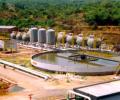
Hundreds of Jokatte villagers adjacent to MRPL refinery near Mangalore have complained of air, noise, water pollution from plant.
The largest such refiner -- Indian Oil Corporation -- has earmarked over Rs 13,500 crore (Rs 135 billion) to meet these specifications (essentially lower sulphur and aromatic hydrocarbons) in petrol and diesel at its seven refineries.

The bench also rejected the submission of senior advocate Mukul Rohatgi, appearing for Essar Oil Ltd, that the hearing be adjourned for four weeks.

RIL is keen on buying Cairn India's Rajasthan crude oil but said it cannot take the oil unless the pipeline from fields to Gujarat coast is built.

Experts say local demand, government policies in retail and refining sector are attracting foreign players.

Crude oil shipments from the US to India rose to the highest levels in November since the conflict began in Ukraine in late February, sparking hopes of a resurgence in oil flows from the US to the subcontinent, reveals shipping data. Shipments from the US have surged as Western nations prepare to impose additional sanctions on Russian crude flows. The US shipped around 450,000 barrels per day of crude last month to India, twice that of shipments in October, according to data from London-based commodity intelligence provider Vortexa.
Chennai Petroleum Corporation Ltd set up a crude oil jetty in Nagapattinam at Rs 960 million to meet requirements of Cauvery Basin Refinery.

Analysts are enthused by BPCL's upstream foray and have re-rated the stock in the past couple of years.

CPCL, in which Indian Oil holds 51 per cent stake, runs a 9.5-million tonnes per annum refinery at Manali in Chennai.

From February to mid-March, oil prices receded rapidly.
Industry experts, analysts say the proposal is 'impractical'. The country's oil refining companies are hopeful that the Organisation of Petroleum Exporting Countries will implement a price band for crude oil which they say will bring more certainty to their operations.
The output of eight core sectors rose 4.4 per cent in September on account of healthy performance by segments like natural gas, refinery products and cement, official data showed on Friday. The eight infrastructure sectors of coal, crude oil, natural gas, refinery products, fertilisers, steel, cement and electricity had grown by 0.6 per cent in September 2020, as per the data released by the commerce and industry ministry.
Pakistan was ready to buy petroleum products from India if these were offered at "right prices", the country's minister of Petroleum and Natural Resources Asim Hussain said.

Investors' wealth eroded by a massive Rs 8,21,666.77 crore on Monday as the market saw a massive sell-off not seen in many months. The BSE benchmark Sensex plunged 1,170.12 points or 1.96 per cent to close at 58,465.89. This is the worst single-day drop for the gauge in over seven months. This was also the fourth straight session of decline for the Sensex.

The output of eight core infrastructure sectors grew 3.3 per cent in August -- the lowest in nine months -- as against 12.2 per cent in the year-ago period, according to official data released on Friday. The previous low was in November 2021 at 3.2 per cent.
Reliance Industries earned a breather when PSU oil firms revised their requirement of diesel from it to 3.7 million tonnes in 2004-05.

According to data shared with the Lok Sabha, 19 road projects awarded after May 2014 were facing delays
What are the implications of the new players coming into the retail segment on existing companies like BPCL, HPCL and IOC? \n\n\n\n

State-run Hindustan Petroleum Corporation is eyeing oil blocks in African countries, its Chairman and Managing Director, Subir Roy Choudhari said on Friday.

Struggling to meet budget targets, the government had in the just concluded fiscal asked cash-rich PSUs to pay second interim dividend as well as undertake share buyback.
PSUs are asking for tax holiday for oil exploration and production activities to continue. The latest Budget imposes a Sunset clause for 100 per cent tax exemption for refining of mineral oil.
Nearly 55,000 officers of 14 public sector oil companies have decided to strike work indefinitely from January 7 to seek higher wages, Association of Scientific & Technical Officer's vice president P K Sharma said in New Delhi on Tuesday
The output of eight core infrastructure sectors contracted to six-month low of 4.5 per cent in July against 9.9 per cent in the year-ago period, according to official data released on Wednesday. The output of these infrastructure sectors expanded by 13.2 per cent in June, 19.3 per cent in May, 9.5 per cent in April, 4.8 per cent in March, 5.9 per cent in February and 4 per cent in January. The production growth of eight infrastructure sectors -- coal, crude oil, natural gas, refinery products, fertiliser, steel, cement and electricity -- was 11.5 per cent in April-July this fiscal against 21.4 per cent a year ago.

Production of eight infrastructure sectors expanded by 7.9 per cent in September -- the highest in three months -- on account of better show by coal, fertiliser, cement and electricity segments, according to official data released on Monday. In September last year, the growth rate stood at 5.4 per cent. It was 4.1 per cent in August. The previous high was in June when the output expanded by 13.1 per cent.
With a view to avoid recurrence of last week's militant attacks at Digboi refinery and a gas pipeline in Assam, the government will tighten security at all key oil installations, Petroleum Minister Ram Naik

The transaction will lead to an open offer for minority holders.

Whatever be India's course of action, it will have an impact on India-Iran ties, notes Aveek Sen.

RIL has sent a draft GSPA to Essar Oil and the contract may be inked within the next few days.
 © 2026 Rediff.com - Advertise with us - Disclaimer - Privacy Policy - Sitemap - Feedback - About us - Terms of use - Grievances